Want

I have this notion that “want” is something other than “desire”.    When I say that I want something it feels different inside of me than if I say that I desire it.  However, I am still working it out.

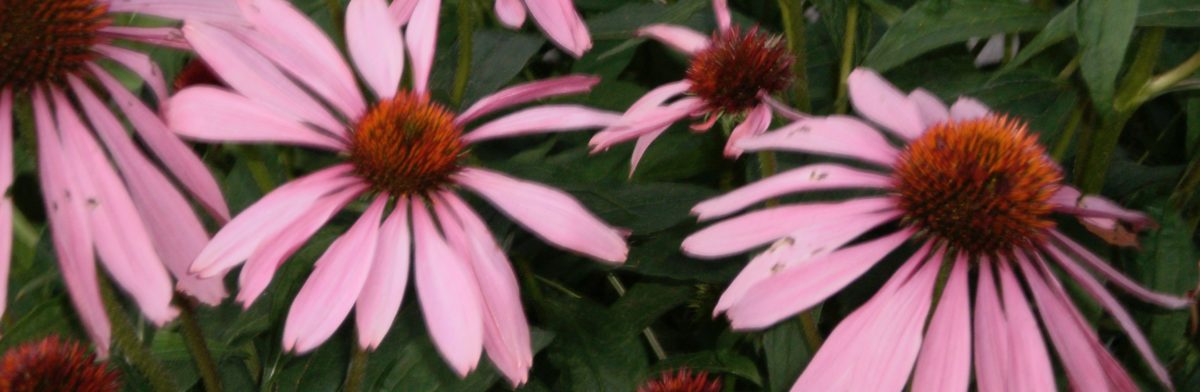
For me to desire something is to feel the energy of attraction.    It is a  feeling response.   There is actually no decision involved except the decision to experience.   For me, desire is what I feel when I see anything around me that I choose to experience.    It happens when I drop boundaries, when I choose to allow something to possess me.  My heart opens to a flower, a person, a sound and they become part of the world that I feel.

Desire is a statement of attraction.   I am involved only in as much as I am being very aware, open on more than a cursory level.

For me, if I want I am more actively involved.     My ego is front and center. My focus is on me and my role .   My self is part of the action and the experience is not neutral.    The choice is not to experience something as it is but to pursue it and make it part of me.    I am not attentive to making me part of it.    I am very aware of me and my edges, and I want to bring it inside those edges.    Desire has no edges;  it is an opening to experience, not to possess.

Desire acknowledges the oneness that already exists.    Want attempts to create a oneness, as though it did not already exist.    Want relies on my doing something.    Desire relies on deep observation.

All this musing is about understanding how I relate to the world and how I choose to experience it.   I would like to be a person of rich desires and meager wants.

Key

All my life I have had the key and didn’t know it.   It’s beginning to make sense, and now I think I had the answer with me all my life.   Everything seems to fall into place if I reach for the key, something I’ve had with me all along.     My body is the key.    When I experience my mind and body joined, everything is joined.   Everything is also released.    I experience a freedom more than I could have imagined.

Learning to experience my breath has been so important.    It has put me in touch with my body in a most intimate manner.    Actually feeling the energy and sensation in my hands when doing Tai Chi Chih has also allowed me to form an intimate relationship with my body.   Realizing this connection has allowed me to go back to my body.

The irony is that so much of my culture has either encouraged me to fear my body or indulge it.   There truly has been a middle way.

While I am amazed at what I have discovered, I am not totally surprised.    All my life I have resisted those worriers who tried to teach me the dangers of the body.   I have instinctively pulled away from mindless excesses as well.   Now I am starting to understand why I was so wary.

I am also finding it interesting that I don’t have to “do” anything.   I just have to allow myself to experience what my body tells me.    There is no effort.   Breathing is not effective as an action.    It is effective for me only if it allows me to experience, to intimately feel my body.    It “works” only if it brings me back to my body, joins mind and body.

My body is actually an easy key to use, like using my fingerprint to unlock my iPhone.   I experience intimately what my body knows, and all barriers disappear.    My feet touch the asphalt of the parking lot, and I melt into what my body knows. I move my hands through the air like thru pudding, and the energy inside of me rises.   I feel my breath, and it is like placing my finger on my iPhone.   A whole universe is opened in an instant.   Tension disappears, freedom surges through all of me.

My body is a pretty amazing key.    I’m learning how to use it better.

Simple

It’s really quite simple.    So simple I am amazed I have not seen it before.  Squeeze / Release (Suffering / End of Suffering).     When I feel things out of sorts, when I feel tightness, when I feel the squeeze reaction in my stomach, that is something to notice.   It is time to pay attention to it, watch it, but only for a moment.  Then it is time to  allow release.    Give my mind something else to do.    Allow things to simply be and not change them.   I don’t cause the release.   The release simply happens.

My mind loves to solve problems.    It is drawn to disorder like a compass needle  pointing north.   My mind sets up the tension, wants the disorder to go away.   Maybe it even offers ways to make it go away.    My human mind has evolved to be very good at performing on demand.   It likes to solve problems and is constantly searching for problems.    Best to give it something useful to do.

Sometimes putting the mind to work actually does solve problems.   Mostly it simply quivers at distraught attention, the pointer dog who sees the bird, strikes a tense pose, and can do nothing.   It wants to act, and sometimes it unskillfully springs unbidden into action, solving problems without being released to solve them.   My mind wants the problem to go away, and tension arises.   I feel the tightness, I feel the squeeze.

For me it helps to give the mind something constructive to do, like paying attention to my breathing.    My mind is like an anxious puppy, wanting to spring into action.   Sometimes it is good to toss it a bone to gnaw on. I send it to my breath, the sensation in my fingers, the touch of the parking lot on my feet.   I don’t make the tension or suffering go away.   It simply ends.

I have lived with the tension of “getting my act together” long enough.   Wanting to act creates tension, the squeeze.    Most of the time it is about something I cannot have an effect on anyhow.   The tension and squeezed feeling is a sure sign it is time to allow the release.

My mind wants action, and most of the time that is wasted effort.   Allowing the mind to convince me that “I have to do something” causes me to suffer, to be tense, to be squeezed.   I don’t want the suffering, but it is what happens.

As soon as I unskillfully yield to my urge to “make it go away,” I know I am being squeezed by my mind.    It is simply a good time to skillfully give my mind something else to do.   It’s actually that simple.

Mindful Movements – Second Five


On September 28, 2017, I listed the first Five Mindful Movements.     These are movements that not only serve to  connect my body and mind.    They also connect me with others who are practicing the same Mindful Movements most days.    Typically, those of us practicing these movements daily, try to do them between 6:30 and 9:00 in the morning.    I hope you will join us.

If you want  illustrations of the movements, contact me at barryschade@gmail.com

Mindful Movement #6

This exercise is called The Frog.

Begin with your hands on your waist, heels together, feet turned out to form a V, so  that they make a 90 degree angle.  Breathing in, rise up on your  toes.

Breathing out, stay on your toes, keep your back straight, and bend your knees.   Keeping your upper body centered, go down as low as you can, maintaining your balance.   Breathing in, straighten your knees and come all the way up while still standing on your toes.   From this position, repeat the movement three more times, remembering to breathe slowly and deeply.


Mindful Movement #7

In this exercise, you touch the sky and the earth.

Your feet are hip-width apart.  Breathing in, bring your arms up above your head, palms forward.  Stretch all the way up, and look up as you touch the sky.   Breathing out, bend at the waist as you bring your arms down to touch the earth.   Release your neck.  From this position, breathe in, and keep your back straight as you come all the way back up and touch the sky.

Touch the earth and sky three more times.


MindfulMovement #8

Start with your feet together and your hands on your waist.  Begin by putting all your weight on to your left foot.  Breathing in lift your right thigh as you bend your knee and keep your toes pointed toward the ground.   Breathing out, stretch your right leg out in front of you, keeping your toes pointed.  Breathing in, bend your knee and bring your foot back toward your body.

Breathing out, put your right foot back on the ground.  Next put all your weight on to your right foot and do the movement with the other leg.

Repeat the series of movements three more times.


Mindful Movement #9

In this exercise, you make a circle with your leg.

Begin with your feet together and your hands on your waist.   Put your weight on your left foot and, breathing in, lift your right leg straight out in front of you and circle it to the side.   Breathing out, circle it to the back and bring it down behind you, allowing your toes to touch the ground  Breathing in, lift your leg up behind you and circle it around to the side.   Breathing out, continue the circle to the front, then lower your leg and put your foot on the ground, allowing your weight to again be on both feet.   Now do the exercise with the other leg.

Repeat the series of movements three more times.


Mindful Movement #10

This exercise is done in a lunge position.

Begin standing with feet together.   Keeping your left foot where it is, move your right foot out so your feet are wider than shoulder-width apart and turn your right foot out 90 degrees.   Keeping your weight on both feet your body will naturally turn slightly toward the right foot to find a comfortable position angled between your two feet.  Put your left hand on your waist and your right arm at your side.   Breathing in, bend your right knee bringing your weight over your right foot as you lift your right ar with the palm of your hand facing outward in front of you, and stretch it to the sky!   Breathe out as you straighten your knee and bring your right arm back to your side.

Repeat the movement three more times.   Switch legs putting your right hand on your waist.

Repeat the same movement on the left four times.  Then bring your feet back together again.


You have finished the Ten Mindful Movements.   Stand firmly on your two feet and breathe in and out.   Feel  your body relax


Order

I certainly don’t  always act this way, but I enjoy putting things in order.   I like following habits of behavior.    I like the feeling of a clean, orderly home with things put away.

There is a lurking danger in this pleasant experience.   I seem to take such satisfaction in it, and so I am wary and cautious of the hidden effect.   Is the satisfaction of brushing my teeth the same way every day at the same time, in the same place a stroking and encouragement of my own ego.   “There, I did it right again,” I seem to feel when I am done.   I’m not sure I want that.

Such deliberate consistency can be a source of pride that I can act such and such.   What I really want most is to experience, to understand to be aware.   Acting rightly, properly, and consistently is not what I want.

Habits can be very convincing that there is order and permanence in my life.   Things will always go well, they will turn out in a predictable way if I just do the right thing.   I get so attached to this habit of acting correctly that I develop the illusion of permanence.   My own repeated actions can conspire to convince me that acting correctly is the Way.   My following an orderly path can convince me that the future can be predicted and controlled.    I can be robbed of the very experience that is constantly new, brings awareness, develops insight.

Perhaps, unlike the advice I give my son, I am better off if I don’t always place the silverware correctly on the side of my plate.  Maybe if I don’t always find my silverware in exactly the same spot, I may be more aware that the silverware is there.    I may actually experience the silverware, not pick it up out of habit from its customary place.

A plan can be a useful thing to get me through the day, but its value in guiding me some kind of right action is over-rated.   The value of a habit is that we can do things without thinking about them.   I don’t think that is so important, and may actually be unhelpful.

Consistency in my behavior can bring a certain order in my day, but it can also undermine awareness and insight.

Teaching

More than any other learning, I think I am newly experiencing what it means to be human.   This is not something I’ve been told or taught.    There is no secret body of information, no doctrines, no sacred and ancient texts.  I am simply experiencing what a human is capable of experiencing.   And I really like it.

There has been a whole tradition of teachers who have shown the way, the direction, the path.    But no one could deliver the secret teaching to me other than my own experience.   Others have shown how they have done it, but my receiving the teaching has meant that I needed to experience something.   There is nothing to believe, nothing to discover except what my experience has taught.

It is a relatively simple path, not paved with doctrines or revelations.   I can invite companions to join me along my path, and I sometimes join them on theirs.    But the learning only comes from our own individual experience.

The tradition of teachers who have shown me this path of learning sometimes speak of the Four Noble Truths that are signposts on the path.   These are the  core teachings handed down from the Buddha generation after generation, based on his own experience.   It has seemed to me that everyone who has told me of the Four Noble Truths in writing or in talks have described them in a slightly different fashion.

This is probably consistent with the directions given by the Buddha not to believe what he has said, but to seek our own way.   He has taught his way of freedom as the Four Noble Truths, but the teaching and the learning is actually in my own hands.   The teaching and the learning rises from my own experience.

Leading a good, ethical life is a good beginning for following this path.    For the most part, this is the path I have followed.    Yet there is still something not quite right, things seem out of sorts, the pleasure of  goodness is ephemeral and transitory.  In spite of being ethical, I encounter a dissonance in my own life and see it all around me.

Recognizing this unsettling tremor in my life is an important teaching /  learning experience on my path.    For me, and for anyone following the path of the Buddha, choosing to be totally open to this experience of dissonance, being willing to be totally aware of it, is an important step down the path of freedom.

Wanting things to be different is a main cause of the suffering, a cause of the dissonance.   Clinging to my notion of how things should be or being repelled from the unpleasantness of how things are causes my dissonance.    I have slowly become aware that the source of the dissonance lies in me.

That is the ‘secret teaching’ that I can only learn from myself.    The suffering is not mine nor the world’s.    It arises from how I encounter the world.    It arise in the relationship between the world and me.   Here is the paradox for me:    the more I yield to being aware of the suffering, the dissonance, the more I am not possessed by it.    The more I embrace the suffering and dissonance, the more I am released.

I know this not in my head, but I feel it in the fullness of my body.    I am aware of it not because of what some teacher has told me, but because of what I have myself experienced.    The lesson goes much deeper than the admonition “fear not.”   It comes from befriending my fear, and I am gradually being set free.

I know that my path is a winding path of liberation from dissonance and suffering.   It seems full of surprises, and I seem to be taking baby steps along that path.    I know that some people refer to this as the middle way of the Buddha, the Fourth Noble Truth.

Actually,  I think it is my path, where teacher and learner walk as one.   For me, it is a joy filled path that I sometimes get to walk hand in hand with friends.   We share notes  and support one another.    We are discovering at the same time what it means for each of us to be fully human.


Bondage

A couple of days ago, I read an article in the Washington Post that has been very troubling.                        (https://www.washingtonpost.com/news/soloish/wp/2017/09/21/are-you-having-an-emotional-affair-its-hard-to-define-but-heres-how-to-figure-it-out/?utm_term=.7bb085e24347#comments )    It contradicts what I have come to see as the core of compassion and reminds me painfully of uninformed mistakes I have made for much of my life.

The article by Lisa Bonos raises the question of whether emotional intimacy with someone not your partner is an unfaithful, destructive affair.   She even audaciously proposes that same-sex emotional intimacies may be all right, but heterosexual emotional sharing may be questionable.

I have a point of view that is, as close as I can figure, the direct opposite of the presumptions Lisa seems to base her article on.    Our culture has doted on one simple kind of relationship, one in which another person is your one-and-only and your life revolves around that person.   For most people, that includes both physical intimacies and emotional intimacies.

“He / she is my best friend” is something I had heard too many times as an exclusive relationship and in support of why two people are married.   For many reasons, marriage has come to mean exclusivity and all-fulfilling in a person’s human relationships.   This is simply wrong, and so is Lisa Bonos.

If Lisa Bonds is correct, then I am having at least a dozen emotional affairs, as well as an affair with anyone who reads this Barry Garden Path site with any interest.   I am sharing my deep emotional life with many people, and I think that has become a treasure and gold mine in my life.   I have the good fortune to have many special friends with whom I share emotional openness, and that doesn’t seem either profligate or cheating on others with whom I share a similar friendship.

Being “in a relationship” is a wonderful life adventure and I think that a relationship is often built upon and protected by certain boundaries that the two people might agree upon.   I don’t think that agreement should ( yes, should ) ever include emotional bondage.   No two people who love one another can sustain that  love by agreeing to make the love exclusive.   It is a mistake to capture the winged compassionate energy of a “love affair”, put it in a cage, and tell it to sing.    The energy will either die locked up, or it will burst free if the individual is to survive.

It has become so clear to me that the love I have for other people, the compassionate experience of oneness, grows the more I practice it.   I am not being unfaithful or cheating on anyone if I open my heart to the people I meet getting on the bus or the woman I talk with leaving Trader Joe’s.

Intimacy is not exclusive, it is a practice of being able to connect on a deep level with other humans.   It means rising to the second level of awareness, which is unity.   I think that kind of connection must be spread around by anyone who can achieve it.  Actually, I think that happens naturally as a consequence of insight.

The emotional nature of intimacy is not something I will ever make the mistake again of trying to experience with one special person.     Each relationship I have is special in its own way and does not detract from other relationships or my ability to be emotionally connected.    In fact, I think it improves it.    All the people I “fall in love with” as they get on the bus or pass by in the parking lot increase my ability to be deeply in love with others.

In short, the kind of exclusive emotional relationship described by Lisa Bonos is both pathetic and  against the innate compassionate nature of humans.


Four

Understanding the Four Noble Truths doesn’t come easy.   It has taken me months of reading, listening and reflecting to get even a small understanding of what seems so simple.   I have the benefit of over two thousand years of teachers, and I have the benefit of the insight of the Buddha himself.   Actually it did take him quite a few years and going down blind alleys before he figured out the Four Noble Truths.

The Four are the golden nuggets of enlightenment:

  • There is suffering
  • The origin of suffering is attachment / aversion
  • There can be cessation of suffering
  • The path is the middle way.


Transformation

I prefer that my posts on Barry Garden Path be my slightly original work and personal reflection.    But when I heard this poem by Portia  Nelson, it felt so close to what I am feeling, experiencing these days.   So I am letting Portia say it all for me.   


Autobiography In Five Short Chapters

Chapter I

I walk down the street.
There is a deep hole in the sidewalk.
I fall in.
I am lost… I am hopeless.
It isn’t my fault.
It takes forever to find a way out.

Chapter II

I walk down the same street.
There is a deep hole in the sidewalk.
I pretend I don’t see it.
I fall in again.
I can’t believe I am in this same place.
But it isn’t my fault.
It still takes a long time to get out.

 Chapter III

I walk down the same street.
There is a deep hole in the sidewalk.
I see it there.
I still fall in… it’s a habit… but,
my eyes are open.
I know where I am.
It is my fault.
I get out immediately.

 Chapter IV

I walk down the same street.
There is a deep hole in the sidewalk.
I walk around it.

Chapter V

I walk down another street.

– Portia Nelson

Choices

For years, I’ve read and listened to discussions about whether humans have free will.   I don’t know if there is an answer, and for me it is a useless argument.   I am not sure whether I have a choice to act thus and thus.    But I am very aware that I am able to decide whether to experience such and such.   I think that  has more importance.

How I live my life is based on insight, and has little to do with free will.  It is insight that allows the energy to flow.

The choice is whether to yield to what is there.   The choice is whether to be open to what lies before me.   The choice is whether to allow my feet to fall on the path of awareness, not a choice whether to allow them to fall on the the path of action.   Action will naturally follow insight and awareness, without effort or direction.   My choice is where to direct my attention, where  to allow it to flow.

My choice is whether to listen to the morning news, whether to drop my barriers to attention and allow what is there to flow in.   I cannot will the news away, but I have a choice whether to experience it.   For me, it is so much more powerful not to think in terms of whether to walk through my garden, but whether to experience it.  I do get to decide whether to allow my garden to draw me into its midst.    I’m not sure I actually decide to put one foot in front of the other.   That action follows my attention.

I don’t think that I actually decided whether to be a biologist or a botanist.   I allowed my attention to follow one to the other, and that is the path I knew to follow.   It was as natural as brushing my hand across the flower when it captured my attention.    I see what is there, and I yield to what I allow to draw me into it.

There was a time to be a monk, my attention focused on no other path.   I simply moved forward on the path, drawn by where my insight drew me.    And as flawlessly, but not without fireworks, I yielded to the call that caused me to leave.   I did, finally, yield to what I knew felt normal and natural for me.   I spent so much time deliberating.   The fruitless debate in my head got me no where.   It was not a logical choice that lead me to finally yield to what I knew was there.

This yielding to awareness happens every day on the bus.   I see someone I know and the first thing I do is turn all my awareness to them, most of the time.   I see someone I do not know.   At once I sense a small flicker of awareness in me, perhaps in them.   I recognize the oneness, the connection between us.   My big decision is whether to open my awareness, to yield to their presence, to remove my instinct to deny connection, to allow what is so obvious to enter.    We are connected, and my decision revolves around how much I will allow my awareness to blossom and be felt.

I think I have a choice about how to experience that oneness.   Sometimes I avert my eyes because the oneness, the connection is so hard for me to accept.   Sometimes it is simply unpleasant.   It is easier for me to ignore their presence.   Sometimes it is pleasant to be aware and it is so much easier.   Sometimes the other person is weighing the same decision, whether to acknowledge my presence by allowing their attention to be directed at me, whether to experience what it feels like to be aware of me.

As I walk up Hennepin Avenue, I am aware of so many people who seem to choose to ignore me even while I am choosing to be aware of them.   Choosing to experience someone is often hard, even in close relationships.

I am slowly learning how to remove the barriers that keep me from experience.    I am constantly surprised how full of fear that choice can be when  time after time it is such a source of joy.    I know how my mental constructs may help me to organize experience, but they also are a serious barrier to open experience.   It is a joy to know that my son, Nathan, understands this.

It takes practice, but I am beginning to feel other humans as they are, to experience their presence.   Other people, including everyone on the bus or walking down the sidewalk, do not exist in my imagination or fantasy.   They are not what my reactions of aversion or desire might conjure up.   I am choosing to experience them as they are, and each of them makes the same choice whether to experience me as I am.

For many it is a quick decision not to experience me, for some it is a curious glance, for some it is the beginning of awareness.   All the while I am making similar choices on how to experience this human being.   Actions naturally flow from insight, from what I choose to experience.